
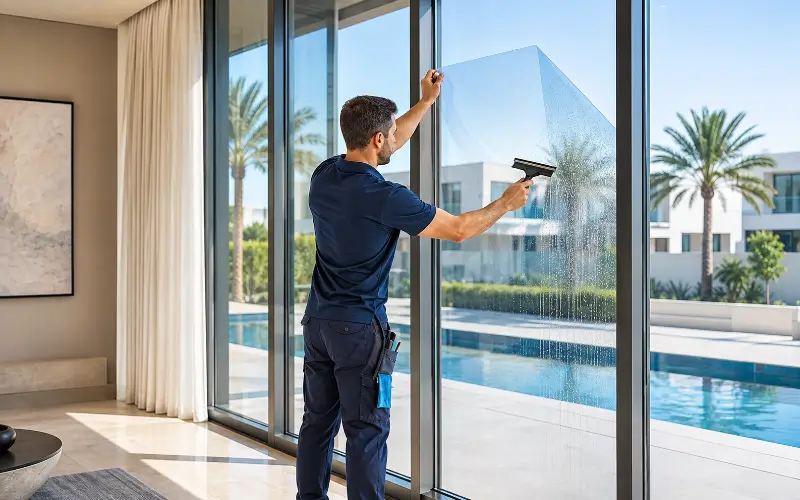
Air conditioning is a necessity in Dubai due to its hot climate. The high-rise apartment, or the large villa will be dependent on the AC systems for several months of the year, when the temperature is comfortable to live in inside the units. But, operating air conditioners for a long time can result in higher bills, particularly in summer. Window film is a practical solution to controlling indoor heat. Helps control solar heat gain through glass, reduces glare and blocks harmful ultraviolet (UV) rays. With proper selection and application, window film can enhance comfort and reduce the cost of air conditioning operation.
Why Do Dubai Homes Need Window Film?
Window glass can become extremely hot in the summer in Dubai and can cause problems for windows in properties that have large windows, balconies, and floor to ceiling windows. Uncoated glass lets in untreated sunlight, which causes the rooms to be hotter inside, making the air conditioning units run more. This is particularly evident in large villas with glass doors and in apartments that are in direct afternoon sun. Window film is added window to provide an additional layer of solar control without homeowners having to replace their windows.
How Window Film Helps Reduce AC Bills
Window film reduces the amount of solar energy entering a property, helping maintain more comfortable indoor temperatures and potentially lowering cooling demand.
1. Solar Heat Rejection Keeps Rooms Cooler
Window film is among the primary motivations of homeowners looking to install window film. Specially made film reflects and absorbs part of the heat from the sun and prevents it from raising temperatures indoors. This is especially beneficial for Dubai properties with windows facing south and west, which get lots of sunlight during the day. Window film can help keep interior temperatures more stable, as it helps to block out some of the sun’s heat, which can help cut down on the need for continuous air conditioning.
2. UV Rejection Protects Furniture and Interiors
Household interiors can be harmed by the ultraviolet rays in the sun over time. Prolonged exposure can lead to loss of color in furniture, carpets, wooden floor, curtains and other decorations. Depending on the window film, up to 99% of harmful UV radiation can be prevented by the use of high-quality window films. This will not only protect in-door furnishings, but also give residents access to natural lighting.
3. Glare Reduction Improves Indoor Comfort
Glare from strong sunlight may cause discomfort when viewing TV, laptop or glass surfaces. It is prevalent in villas that have open living spaces and apartments that have large windows. Window film eliminates glare and provides a better working, watching TV or resting environment. The right film can allow you to manage glare while avoiding dark rooms.
Understanding Typical Energy Savings from Window Film
The savings that a homeowner can expect from electricity will depend on the size of the windows, the type of glass, the performance of the window film, the orientation of the house, the insulation level, and how much the homeowner plans to use the AC. The outcome can vary based on the type of villa and the amount of sunlight it receives.This can vary between a large Villa with lots of glass windows and a small apartment with low light. Even though window film can help cut the cooling load, it does not necessarily mean that the total utility cost will also be reduced by the same percentage as the heat rejection rating of the window film. It is important for homeowners to evaluate technical details and assess their own home situation before making an estimate of potential savings.
How to Choose the Right Window Film for Your Home
Not every window film offers the same performance, so it is important to compare product specifications before making a decision.
1. Check Visible Light Transmission (VLT)
VLT (or visible light transmission) is a measurement of the amount of visible light that can pass through the film. The higher the VLT percentage, the more natural daylight that will enter a room; the lower the VLT percentage, the darker the room will look, and the more effective the glare control. For instance, 70% VLT permits a lot more daylight than 30% VLT. A lighter solar control film might be a good option if you’re more concerned with living areas that are bright, but not too sunny.
2. Consider Ceramic and Nano-Ceramic Films
Some properties require solar control, but not using very dark window tinting, making ceramic and nana-ceramic films popular choices. They utilize the advanced ceramic material to control solar energy and keep good visibility. They do not all perform the same so look for Total Solar Energy Rejected (TSER), infrared rejection, UV rejection and VLT figures instead of the product name. Other movies also employ a metallic layer for reflecting the sun’s heat, but homeowners must understand how these layers will look, reflect and blend into the existing glass.
3. Check the Warranty and Installation Quality
When buying a good quality film the warranty should be clearly stated for peeling, cracking, discoloration and bubbling. Inquire about the warranty term, conditions, and if it includes the film itself and installation. Professional installers should also ascertain if there is any single or double glazing in place and whether it can be used with the chosen product. This minimizes potential thermal stress and glass damage issues.
4. Choose a Reliable Supplier
When choosing window film, product specifications, authentic materials and installation support are all important. If properties are located in the UAE, working with an experienced window film supplier in UAE can help homeowners understand the available options and select the right window film based on their glass type, sunlight exposure, and cooling requirements.
Request technical data sheets and written warranties before deciding on a purchase. Another good reason for requesting film samples is that you can look at the various colours of your windows in daylight.
Read Also: Weekend Activities UAE
Disclaimer: This content is for informational purposes only. Details may change over time. Readers should verify information with official sources before making any decisions.
