

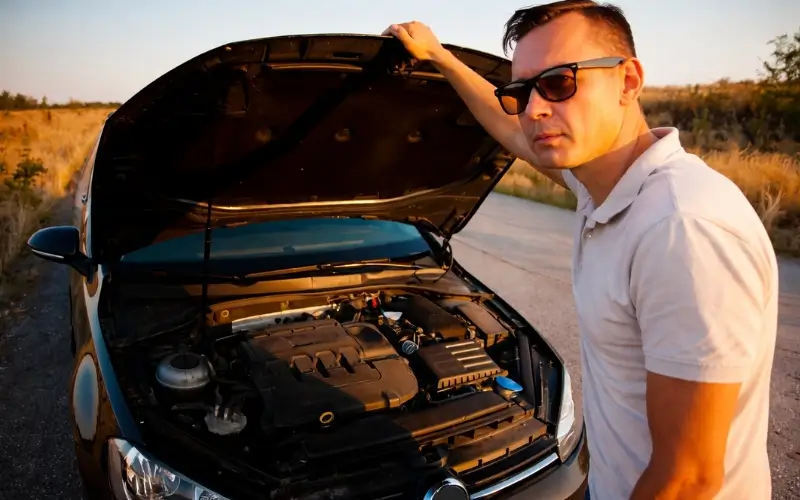
Have you ever seen your VW’s temperature needle suddenly rise during a short drive in Dubai? The heat that is creeping under the hood is more than a warning. It is a countdown. A failed coolant sealing, a cracked hose, or an ignored leak could lead to a warped engine gasket, or worse. Sounds dramatic? This is real. VW engine overheating can be a problem that begins quietly, but ends with a lot of smoke and steam and hefty repair bills. We will break it down for you before it damages your motor or causes you to incur expensive Dubai Car Engine Repair.
Early signs of engine overheating in VW models
Volkswagens rarely give you a single warning when they start to overheat. If you notice the signs early enough, you can avoid serious damage. Ignoring the signs? Then, the minor VW engine issue can turn into a full-blown engine failure. Here’s how your VW warns you before it burns out:
- This is a warning sign. It usually indicates that the pressure in the cooling system is increasing too quickly, which is often caused by the thermostat not opening or because the radiator fan has not kicked in. This is the first thing drivers notice when driving in Dubai during hot weather.
- The temperature gauge shoots up when you start the vehicle. The engine temperature gauge climbs faster than expected five minutes after you start the car. The needle should remain in the middle. You may already be dealing with VW overheating if it continues to rise towards the red zone. Always keep an eye on your engine, especially when you are in traffic.
- It may sound strange, but the heater blows cold air when the cooling system is not working. Why? There is no liquid coolant in the lines. Instead, there is either air or steam. This usually indicates that something is boiling in the coolant lines.
- It could be that your VW radiator fan suddenly becomes very loud or does not turn on at all. It is neither normal nor expected. It is the fan’s job to regulate engine temperature at low speeds. Engine temperature spikes can be caused by a fan that is not working or is not working at all.
- What is that sweet, sickly odor after driving? This is the coolant hitting hot metal. It usually comes from a cracked reservoir or a leaky hose. The smell could be coming from burning engine oil if it is stronger or darker. This means that you may already be losing the integrity of your gasket. These smells are the car’s equivalent of screaming.
- Power Drop and Engine Hesitation – When engines overheat, powertrain control systems will often reduce performance in order to protect internal components. If your VW feels sluggish or hesitates, in the heat of Dubai, it might not be a simple tune-up. You may need to cool off.
These symptoms are not random. Your VW is trying to get your attention before the problem gets worse. VW engine overheating can be repaired without having to open the engine if caught early. Once the gasket is gone, it’s a different story.
Common causes of VW engine overheating
If your VW engine is overheating on a regular basis, it is likely mechanical in nature. This is often ignored. The reality is much more complex than many drivers think. Here are six reasons why your Volkswagen’s engine may be running too warm, particularly under Dubai’s extreme conditions.
- Coolant Hose Deterioration: Due to engine vibration and heat cycles, coolant hoses degrade over time. A small crack or soft spot in the hose can cause a leak that is slow and causes pressure loss. A hidden hose problem can cause a VW engine to overheat even if you top off the coolant.
- Thermostat stuck: If the thermostat is stuck shut, it will prevent coolant from reaching the radiator. This causes hot coolant to build up in the engine block. Temperatures can rise quickly, especially when you are in stop-and go traffic. This part is often faulty without warning.
- Radiator blockage due to dust and debris: Dubai’s air contains fine dust which clogs the radiator fins with time. The radiator cannot effectively dissipate the heat when airflow is reduced across it. In VWs driven in cities, the grille is exposed to dust, oil mist and insects. This reduces cooling efficiency.
- Weak or Faulty Pump: The pump circulates the coolant throughout the engine and radiator. Coolant flow will slow down if the impeller blades or belt become loose. In extreme cases, this can cause uneven temperature across the engine block. Standard inspections often miss a weak pump.
- Electric fan motor failure: Your radiator’s electric fan helps you when you are idling, or even in traffic. The radiator will not receive airflow if the fan motor or sensor fails. When the fan does not engage properly, many overheating situations begin.
- Malfunction of the Oil Cooling System: In many VW engines and turbocharged models in particular, oil is used to cool the engine. Even if the coolant level is normal, engine temperatures can rise if the oil cooler becomes blocked or leaks. Even if you believe your cooling system is working properly, overheating may still occur.
Tip: Never look only at the coolant tank. It is rare that a VW’s overheating can be attributed to a single component. It is often caused by multiple systems going out of sync. The thermostat, fan speed, coolant flow, and air exchange are all involved.
By catching these problems early, you can save more than just your gasket. You will also protect the engine from heat damage.
How to fix the VW engine overheating by performing the proper checks
It’s not enough to just add more coolant and hope for the best. Before the damage gets worse, it’s important to check the right things in the correct order at the Best VW Garage Dubai. These six steps of inspection will provide you with real answers and not just guesses, whether you are sweating in Sheikh Zayed Road or parked in your driveway.
- Check for Crust Marks or Dried Coolant: Open the hood, and look around the radiator cap, hose connections, and coolant reservoir. You may see pink, white, or green marks that are dried coolant. This is usually the result of pressure escaping. Even if there is no dripping, this can be the first sign that the cooling system is weak.
- Open the expansion tank only after the engine has cooled completely. Is coolant low in the tank? Is it brown or murky in color? VW engines require the correct G13-type of coolant. Any other coolant can cause corrosion or internal buildup. Coolant that is clear and clean helps to maintain temperature and flow under load.
- Radiator Hoses Feeling During Warm-Up Start the vehicle cold, and allow it to idle while the hood is open. After a few moments, gently touch the upper radiator pipe. If the temperature remains cool, it could be that the thermostat is stuck closed. This would prevent the flow of air to the radiator. Overheating can occur very quickly.
- Listen to or feel the cooling fan behavior: Stand on the side of the radiator and listen. When the engine reaches operating temperature, the fan should start. It could be that the temperature switch or fan relay is not working. It directly impacts how the engine cools when it is at idle or low speed.
- Test the System With Pressure: A pressure test adds simulated heating pressure without running the engine. This can reveal weak hoses or small leaks. It may also show a cracked reservoir, which is not visible when the engine is cold. This is the only way for most VW models to detect a leak prior to a breakdown on the road.
- Check for Gasket Contamination. Pull the oil cap off and look underneath. If you see a frothy or milky paste, it could be a sign that coolant and oil are mixing. This is a sign that the head gaskets are already stressed, usually caused by overheating. This mixture can wear out internal and external parts, even if it sounds like the engine is working fine.
Checking these points will not only fix symptoms but also find the root cause of VW engine overheating. If you leave small leaks, stuck thermometers or clogged cooling fluid alone, they can slowly damage your engine. If you act quickly, you may be able to save both your gasket and your wallet.
Cost of VW Overheating Repairs in Dubai
You probably think about the cost of the repair when you notice that your VW engine is overheating. Fair question. The answer will depend on the exact cause of failure. Some fixes are simple and quick. Others? Others? Here is an estimate for common overheating repairs in Dubai based on the typical problems we see. Here’s an easy-to-understand breakdown that will help you plan your budget before damage escalates.
| Repair Task | Estimated Cost (AED) |
| Coolant flush & top-up | 180 – 350 |
| Thermostat Replacement | 350 – 600 |
| Radiator cleaning or blow-out | 300 – 500 |
| Radiator Fan Motor Repair | 450 – 800 |
| Water Pump Replacement | 850 – 1,200 |
| Head Gasket Repair Basic Level | 1,600 – 2,500 |
| Pressure Testing & Leak Diagnosis | 200 – 300 |
Prices may change depending on the VW model you own, availability of parts, and your response time after noticing the first symptoms. Driving around in Dubai with a cooling problem that is only half fixed will double your bill in a matter of weeks.
If you catch it early, you may be able to get away with just a thermostat and coolant flush. If you wait too long, gaskets can be damaged, or the cylinder head may warp. It’s not worth the risk. Especially when the heat is on.
Spending on a new thermostat is better than spending money later to replace a headgasket. Early repair of VW engine overheating means less downtime and less risk, as well as less cost. The longer you delay, the fewer options you will have.
It is important not to ignore the fact that your VW engine has overheated even once. The engines may be smart, but they are not invincible. A leak that is ignored, a thermostat that gets stuck, or a warning missed can lead to warped metal and an expensive repair bill. In Dubai’s heat, it can happen quickly, especially if you are stuck in traffic or if you push your car on long drives.
Waiting for your dashboard or hood to glow like a Christmas Tree is not the solution. Our VW experts will inspect the car properly, test it under pressure, and repair any problems before they spread. We only use original parts and proper tools. We don’t recommend cheap substitutes. And we give you honest advice on what your vehicle needs. Booking a VW overheating diagnostic today will keep your engine cool and your ride smooth. It will also save you money.



Leave a Reply