

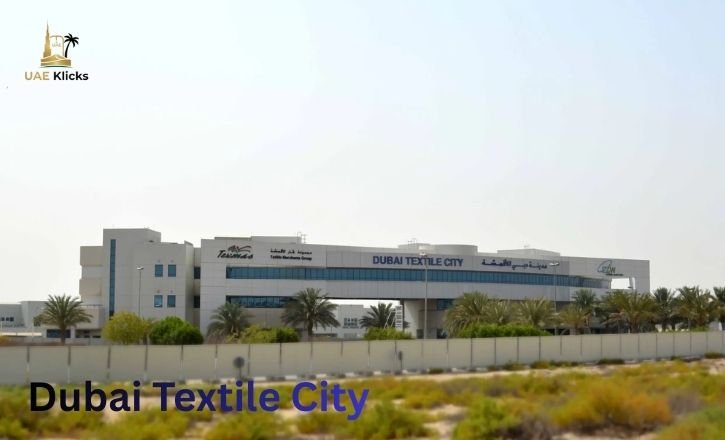
The newcomer of the most vibrant trade economy in the Middle East, the Dubai Textile City, has become a specialized ecosystem tailored to serve one of the most aged industries in the world and the most globalized one, as well. It is placed as a purpose-built textile free zone, where manufacturers, traders, distributors, and logistics providers are linked in Asia, Africa, and Europe.
With the world supply chains changing, and the need to be quick, efficient, and reliable increasing, Dubai Textile City is emerging as a strategic option at a time when businesses are required to be connected to regional markets, and at the same time enjoy the world-class infrastructure and pro-business policy. The paper discusses its mission, modus operandi, competitive edge, as well as its increasing influence on the regional and global textile supply chain.
Strategic Location at a Global Crossroads
This situation is the case in the city of Dubai, where the Dubai Textile City lies within the industrial corridor of one of the most connected trade hubs in the world. The emirate is located within an eight-hour flight distance to two-thirds of the international population, making it a natural entry point between:
- The manufacturing hubs of the textile industry in South Asia
- European fashion markets
- African growth economies
- Retail industries in the Gulf Council (GCC)
The free zone will have the advantage of being near some of the biggest logistics facilities, including:
- Jebel Ali Port – the largest man-made harbor in the world and the busiest in the Middle East.
- A fast-growing international cargo airport, Al Maktoum International Airport.
This combined access to the sea, air, and land routes will greatly lower the transit time as well as supply chain bottlenecks. Speed-to-market is not a luxury- it is a necessity in competition with textile traders in tight seasonal schedules and those engaged in fast-fashion schedules.
Purpose-Built Infrastructure for the Textile Industry
It is in contrast to general industrial areas, where Dubai Textile City was concerned because the area was designed to suit the operational requirements of the textile and garment companies. Its service facilities support the whole chain of values- from storage of raw material to distribution of finished goods.
Explore: Dubai Flower Centre
Modern Warehousing and Showrooms
The free zone offers:
- Large warehousing buildings with large spaces to store fabric in bulk.
- Temperature-controlled environments to preserve sensitive materials
- Combined sales rooms where buyers can make their inspections and trade visits.
- Office trading and administration at the location.
This model of co-location guarantees that firms are in control of inventory, sales meetings, and logistics, all in one complex, simplifying operations and reducing overhead expenses.
Business-Friendly Free Zone Model
Being a free zone, Dubai Textile City offers the following incentives at the core of its attractions:
- 100% foreign ownership
- Total cash repatriation of capital and profits.
- Zero personal income tax
- Effective customs operations.
- Streamlined procedures of company formation.
These benefits are in line with the greater Dubai economic diversification strategy, which makes the emirate a facilitator of trade in the world and not just an oil-based economy.
A Hub Connecting Asia, Africa, and Europe
Dubai Textile City is a vital intermediary in a textile supply chain throughout the world. The most prominent textile producers of the world, such as India, Pakistan, China, Bangladesh, and Turkey, are exporting to the Middle East and Africa in large volumes.
Suppliers usually concentrate inventory in Dubai instead of direct shipments to fragmented end markets. There they are redistributed effectively throughout:
- GCC retail markets
- Trade systems: East African trading networks
- North African distributors
- Learning new Central Asian markets.
Such a model of merging minimizes risk and enhances liquidity. The buyers, on their part, are able to access a considerable variety of fabrics, garments, and accessories in a single centralized market.
The outcome is a local textile trading system that brings less frustration to intercontinental trade, and helps the smaller retailers that might not have the size to import directly out of Asia.
Diverse Business Ecosystem and Industry Clusters
The range of textile-related businesses located in Dubai Textile City is as follows:
- Exporters and importers of fabrics.
- Garment manufacturers
- Fashion wholesalers
- Textile converters and finishers.
- Freight forwarding and logistics companies.
- Purchasing houses and finding representatives.
This synergy of operations is through the effect of clustering. The advantage of the businesses is that they are close to suppliers, service providers, and customers in the same zone.
More specifically, the emergence of e-commerce and the growth of private-label fashion brands have increased the demand for flexible warehousing and rapid re-export. The infrastructure provided by the Dubai Textile City facilitates just-in-time inventory control, which allows companies to adapt to current market trends in the market at a very fast pace.
Competitive Advantages Over Regional Textile Hubs
Although there are textile markets in cities like Mumbai, Istanbul, and Guangzhou, the Dubai Textile City has a different value proposition based on neutrality, connectivity, and stability.
Political and Economic Stability
The business environment in the United Arab Emirates offers stability in the regulatory environment and robust legal frameworks to companies. The stability is more specifically relevant to businesses that trade in volatile or emerging markets.
Logistics Efficiency
Dubai has remained one of the best in global logistics performance. The sophisticated port automation, digitization of customs, and multimodal connectivity enable goods to pass through the supply chain swiftly.
In the case of time-sensitive textile products, particularly fashion collections, which are dependent on seasonal releases, the shorter the lead times, the greater the profitability.
Financial and Banking Infrastructure
The highly developed financial services ecosystem allows international transactions, trade financing, and currency management in Dubai without any issues. Banking solutions that are effective are essential to textile dealers who make low margins but trade in large quantities.
Access to Regional Retail Growth
Africa and the Middle East form among the rapidly expanding consumer prospects in the world. The growth in urbanization, the growth in the number of middle classes, and the number of people in demand for ready-made clothes provide a long-term opportunity to textile distributors based in Dubai.
Contribution to Dubai’s Diversified Economy
Dubai Textile City is a part of the bigger plan of the emirate to become a trading and logistics hub in the world. Most of the GDP in Dubai is contributed by the non-oil sector, with trade and logistics taking centre stage.
Through its specialization in textiles (a high-volume commodity that is both traded on a global level and with a significant volume), the free zone helps station:
- More re-export business.
- The establishment of employment in logistics, warehousing, and trading.
- Foreign direct investment attraction.
- Enhancement of the reputation of Dubai as a business portal.
The textile industry does not get the same recognition as the aviation or tourism industry, yet its contribution to the movement of trade is high. Shipment of textiles is a regular year-round commercial business that has stabilized the logistics operations.
Further, with sustainability being considered more of a priority in the fashion sector, centralized locations such as the Dubai Textile City can facilitate better transparency, consolidation, and efficiency of the supply chain to decrease unnecessary shipments and stock.
Supporting the Future of Textile Trade
The textile industry is experiencing a major revolution that is brought about by:
- Digital sourcing platforms
- Faster fashion cycles
- Sustainability standards
- Supply chain visibility is in demand.
Dubai Textile City is in a good position to sustain these changes. Businesses can combine the digital inventory management systems with their infrastructure and rebalance sourcing strategies with a single-market dependency with their location.
With the changing world trade trends of increased global risks brought about by geopolitical factors and interruptions in freight, intermediary ports such as Dubai are becoming critical. They offer optionality to enable companies to divert shipments, shift inventory flows, and to react promptly to fluctuating demand conditions.
Conclusion:
The Dubai Textile City is not just an industrial complex, but a calculated trade platform designed to operate in one of the most vibrant industries in the world. It has created an integrated infrastructure, free zone incentives, and unrivaled global connectivity, making it a key textile hub connecting the manufacturing giants in Asia with the emerging markets in Africa, Europe, and the Middle East.
Dubai Textile City provides an attractive offer to both textile manufacturers interested in regional growth, traders interested in achieving efficiency, access, and scale, and investors interested in exploring opportunities in the global supply chain: efficiency, access, and scale in a predictable and progressive economic context.
With international trade tying more closely together, the hubs such as the Dubai Textile City will persist in defining the future of the textile trading industry on different continents.
FAQs
What is Dubai Textile City?
Dubai Textile City is one of the special free zones in Dubai that is focused on manufacturing, trading, warehousing, and distribution of textiles.
The location of Dubai Textile City?
It is based in Dubai, which is close to the major logistics centers, including Jebel Ali Port and Al Maktoum International Airport.
What kind of businesses are carried out there?
The zone has fabric importers/exporters, garment producers and manufacturers, fashion wholesalers, logistics firms, and sourcing agents.
What are the greatest advantages of acting within Dubai Textile City?
Some of the important advantages are the ability to own 100 percent foreign, tax benefits, modern warehousing, simplified customs processes, and good connectivity within the region.
Which markets does it serve?
It links textile suppliers and buyers in Asia, Africa, Europe, and the GCC region.
Dubai Textile City, is it limited to large companies only?
No. It hosts both small and large businesses, such as SMEs and trading firms, and international distributors of textiles.


Leave a Reply